

Before you dive in, a tiny favor that makes a big difference: if something here lands for you, would you tap the heart, leave a comment, or share this with a friend? (A share is basically the Substack version of setting out extra chairs and saying, “Come sit with us.”) I read every comment, and it helps this little corner of the internet find more people who might need it.
For six decades, I was convinced I couldn’t sing.
Not “I’m shy.” Not “I’m rusty.” I mean couldn’t. The kind of certainty you carry like a medical diagnosis. Some people have lactose intolerance. I had melody intolerance.
My lack of talent never interfered with my enthusiasm. I loved to sing anyway, mostly in the car, where the acoustics and denial are excellent.
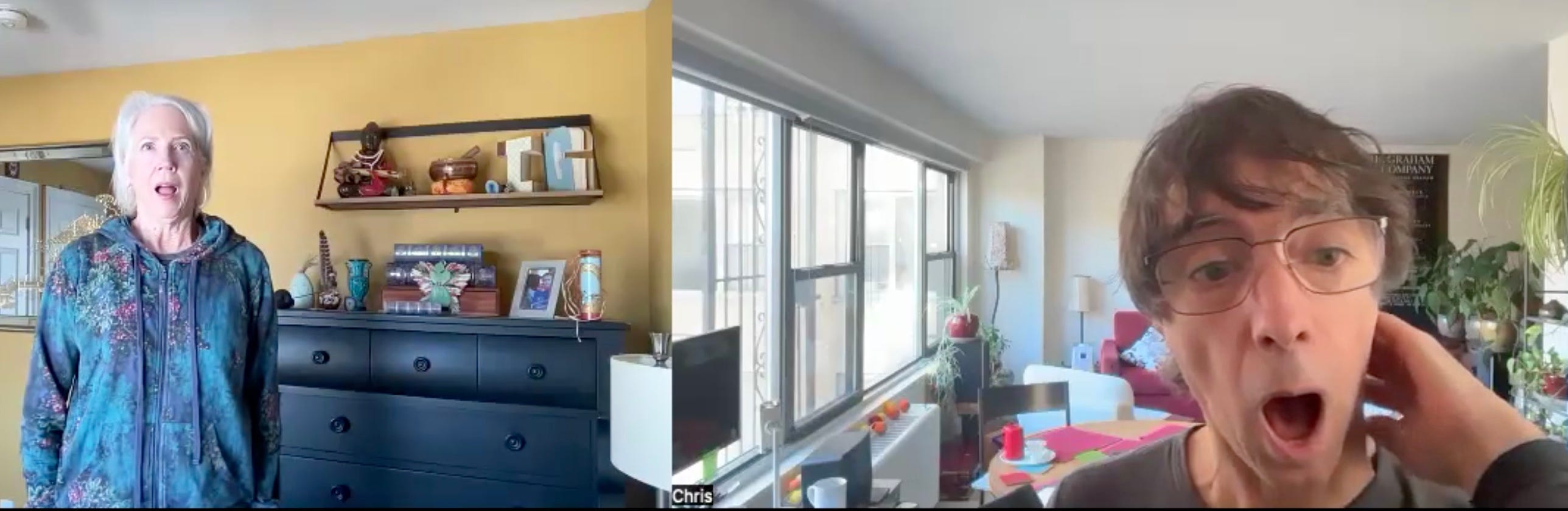
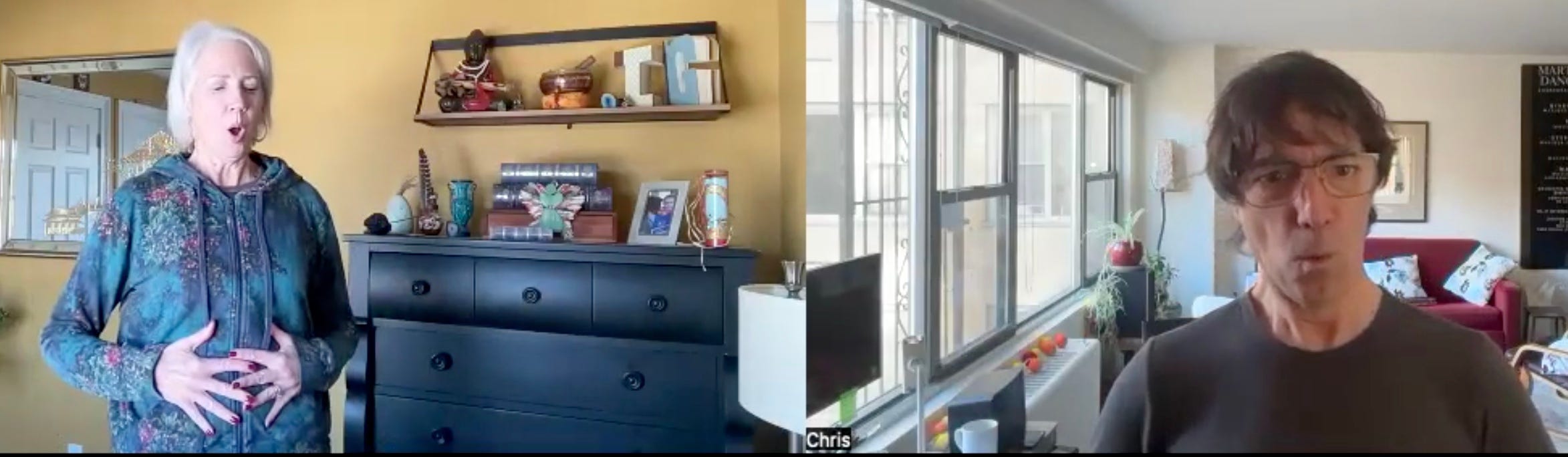
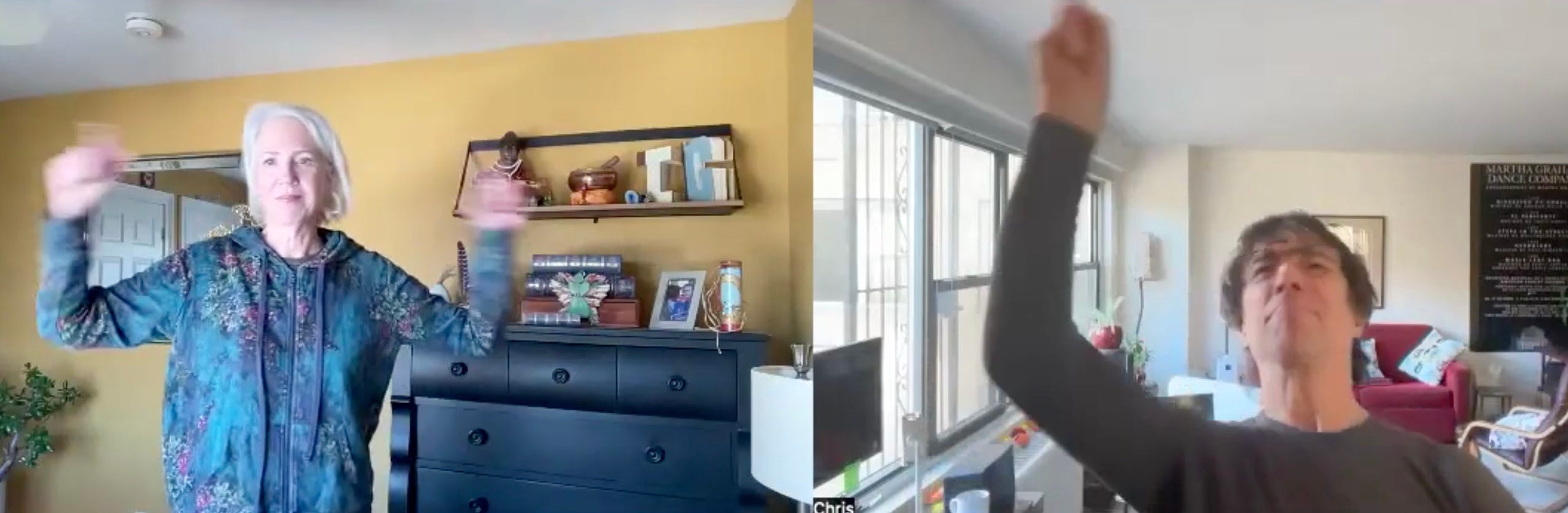
Then I met a retired chorus teacher from the Bronx who taught his elderly mother to sing. And I thought: if he can teach one woman of advanced wisdom, he can probably teach another. Chris offered a sample class and suddenly I was taking weekly singing lessons on Zoom, because this is apparently how my third chapter is going.
New hobbies, fresh humiliation, better posture.
It’s been a year since I started, and I want to share what I’ve learned from someone who explored her voice for the first time.
Here are the 10 things I learned about singing:
1. You must connect to your whole self to sing well.
This goes with anything you do, really. I can’t believe it took me so long to realize it. As a yoga teacher who philosophizes about the union of mind, body, and spirit, it’s time to embrace the lesson.
Old habits die hard. I spent most of my life on autopilot, not caring much about the impact of my over-scheduled life on my body. I treated myself like a machine. No time to feel. Just get to the next thing. Like an efficient little Amazon warehouse with a pulse.
Once I stopped working full-time, I finally had the bandwidth to notice nuance and subtlety without steamrolling ahead. Singing became a refiner, gently but relentlessly insisting I show up as a whole person—breath, body, feelings, attention, working together instead of taking turns.
Which is a poetic way of saying: I found an emotions drawer I hadn’t opened since the Backstreet Boys were still together. And it turns out those feelings weren’t extra. They were part of the instrument.
2. You have to feel your feelings to sound beautiful.
There’s a huge difference between singing the notes and singing with your whole being.
That difference is what makes a song land.
My emotional connection had been turned off for a long time in order to survive. And then in lessons, feelings got shelved again because I was too busy focusing on the notes and whether I was singing them “right.” I wasn’t able to “be” in the song while I was basically doing musical spreadsheet work.
“What is Fantine feeling here?” Chris asked during I Dreamed a Dream.
I knew that feeling—profound regret, sadness, the weight of choices. But I was still too busy counting beats to fully feel it. My heart was sobbing in French while my brain was yelling, “ONE-and-TWO-and—DON’T RUIN THIS.”
Then we started Both Sides Now. After practicing it for a few weeks, something clicked. Joni Mitchell was only 23 when she wrote it. How could this young woman know my whole life story? I’d heard the song casually on the radio, but I hadn’t ever sat with the words. This was some soul-stirring shit. And the truth is, I don’t really know life at all.
That was the moment I understood the assignment: feelings aren’t something you add to a song. They’re the song.
3. I hated the sound of my voice until I didn’t.
Before lessons, whenever I heard a recording of myself, I would wince. When Chris suggested I listen to our class recordings to practice, it was painful. I really didn’t like the sounds I was making.
But I wanted to progress, so I swallowed this bitter pill. Week after week, I’d listen and got used to how I sounded. I had only heard myself inside my head. Now I was learning to be at peace with my voice out in the world, not in a “love yourself” poster way, more like making friends with a neighbor I’d spent years side-eyeing.
4. Training your vocal cords is a workout.
Who knew you could change how your voice sounds through targeted exercises? I practiced almost every day and little by little my voice started to respond. It’s not just “sing more” — it’s drills, repetition, and building stamina like you’re training a tiny athletic team in your throat.
5. Singing is biomechanics with feelings.
I have TMJ, and some of Chris’s exercises targeted the jaw. I could feel my jaw resist the two corks I put between my teeth to get my mouth to relax. A lot of the work was reprogramming the facial muscles. My gag reflex wanted to kick in too, but eventually the sensations calmed down.
Nothing says “personal growth” like trying not to dry heave on a Friday at 10:00 a.m.
The tongue plays a huge role vocally, and a tense tongue is bound to mess up your sound. Now I routinely do the tongue exercise as a check-in. Let’s call it ‘oddly satisfying,’ like sticking your tongue out at your husband when you don’t think he’s looking.
“Oh, honey…I’m just practicing.”
Chris also had me stand for the whole class. No curling into myself, no singing from a collapsed ribcage. Posture and breath weren’t “nice extras.” They were the foundation. I had to feel my feet, lengthen my spine, and let the breath drop in like it actually had somewhere to go.
And then there was the bubble exercise: blowing steadily through a straw into a glass of water. Yes, actual bubbles. It looked like preschool science hour, but it taught my breath what my brain couldn’t: steady support, less panic, and a lot less “holding on for dear life.”
6. Rhythm is a full-body experience.
You don’t just count the beat. You feel it. In your body. Which was one of the hardest lessons for me—yes, harder than jamming two corks in my uptight mouth.
I had to keep time and sing, and suddenly I felt like that kid in gym class again. I don’t know why. Maybe my body still remembers dodgeball as an emotional event. Anyway, let’s move on before I break into a cold sweat.
7. I sing better when I’m having fun.
As I was learning, I got very in my head about doing things right. I wanted to be a good student. The best student. This caused anxiety to creep in and then nothing worked right.
Chris knew how to get me to laugh and not take myself so seriously. Sometimes he’d act silly. Sometimes we’d move our bodies to get the energy flowing. Turns out my voice responds well to joy and poorly to my inner corporate compliance officer.
8. I am my own worst critic, but I’m learning to retire her.
I was constantly judging myself when I couldn’t hit a note. Sometimes I’d back away from the note if I thought my voice would crack. Chris would notice right away.
That’s when he told me about Buddha’s second arrow.
Do you know the story? The first arrow is unavoidable pain—like missing a note or singing the wrong word. The second arrow is our reaction: anger, self-blame, worry, dwelling. It magnifies the original pain and creates prolonged suffering. The second arrow is optional, a choice we can control through mindfulness.
In other words: I’m allowed to miss the note. I’m just not allowed to bully myself for it for the next seven business days.
9. The fastest way to sing is to stop trying to sing.
Sometimes Chris would tell me to say the lyrics in my speaking voice. With just a few tweaks, the speaking would turn into song.
To elicit certain sounds, he had me channeling my inner mob boss… or La Divina. Becoming another person helps you sing. Role playing is a way to get someplace new. I don’t claim to understand it, but it works.
Apparently my voice likes costumes. Even imaginary ones.
10. Singing lessons aren’t really about singing.
They’re about learning to hear yourself—literally and figuratively. About taking up space with your voice. About letting yourself be heard even when you might crack.
Every woman in her third chapter who has spent decades making herself smaller, quieter, more palatable needs to learn this. Not necessarily through singing. But through something.
So here’s my question for you. What have you avoided your whole life because you decided you were “bad” at it? What would it feel like to try anyway—not to be good, but to be present, embodied, willing to crack?
Your voice—whatever form it takes—deserves to be heard.
I’m excited (and a little nervous) to share this: I’m doing my first-ever Substack Live with Chris—my retired Bronx chorus-teacher-on-Zoom—on Monday morning, 1/26 at 10:00 a.m. and you’re invited.
We’ll talk about what I’ve learned this past year, what actually helps when you think you “can’t sing,” and the bigger thing underneath it all—learning to hear yourself and take up space with your voice. Expect a few stories, a few laughs, and a very real behind-the-scenes look at how this whole “finding my voice” experiment has gone. Come live, bring your questions, and if you can’t make it, you can still RSVP so you’ll get the replay.
Eastern! I’m thrilled you’re coming💕
What surprised me is how much this felt like a piece about listening, not sounding good. Listening to your ribs, your breath, your jaw, the moment your body says yes or no. Listening to yourself without rushing in to correct or evaluate.
It made me wonder if singing lessons are secretly a practice in restraint. In not interrupting yourself. In letting a note finish, even if it wobbles. That feels radical in a culture that rewards quick fixes and confident delivery. Your willingness to stay with the wobble felt like the quiet heart of this piece. Beautiful 🧡